Launching paygap.fyi: The Sophare Global Pay Gap Monitor
· 3 min read


We are excited to announce the launch of the Sophare Global Pay Gap Monitor, a public, data-rich view of gender pay gap reporting across the UK, Ireland, and France.
We are excited to announce the launch of the Sophare Global Pay Gap Monitor, a public, data-rich view of gender pay gap reporting across the UK, Ireland, and France.

In an age of skyrocketing pay transparency, a company’s compensation philosophy acts as a public statement about how the organization rewards success, values loyalty, recognizes ambition, and fosters equity within the workplace. A clear compensation philosophy defines the principles that guide pay decisions like setting salary ranges for jobs. Those principles reflect how a company balances competing priorities — internal budget discipline and external competitiveness, short-term affordability and long-term retention, individual performance and workforce equity. Getting that balance right requires understanding the market forces shaping labour supply and demand, and translating them into a pay structure that attracts and sustains the talent your organisation needs.
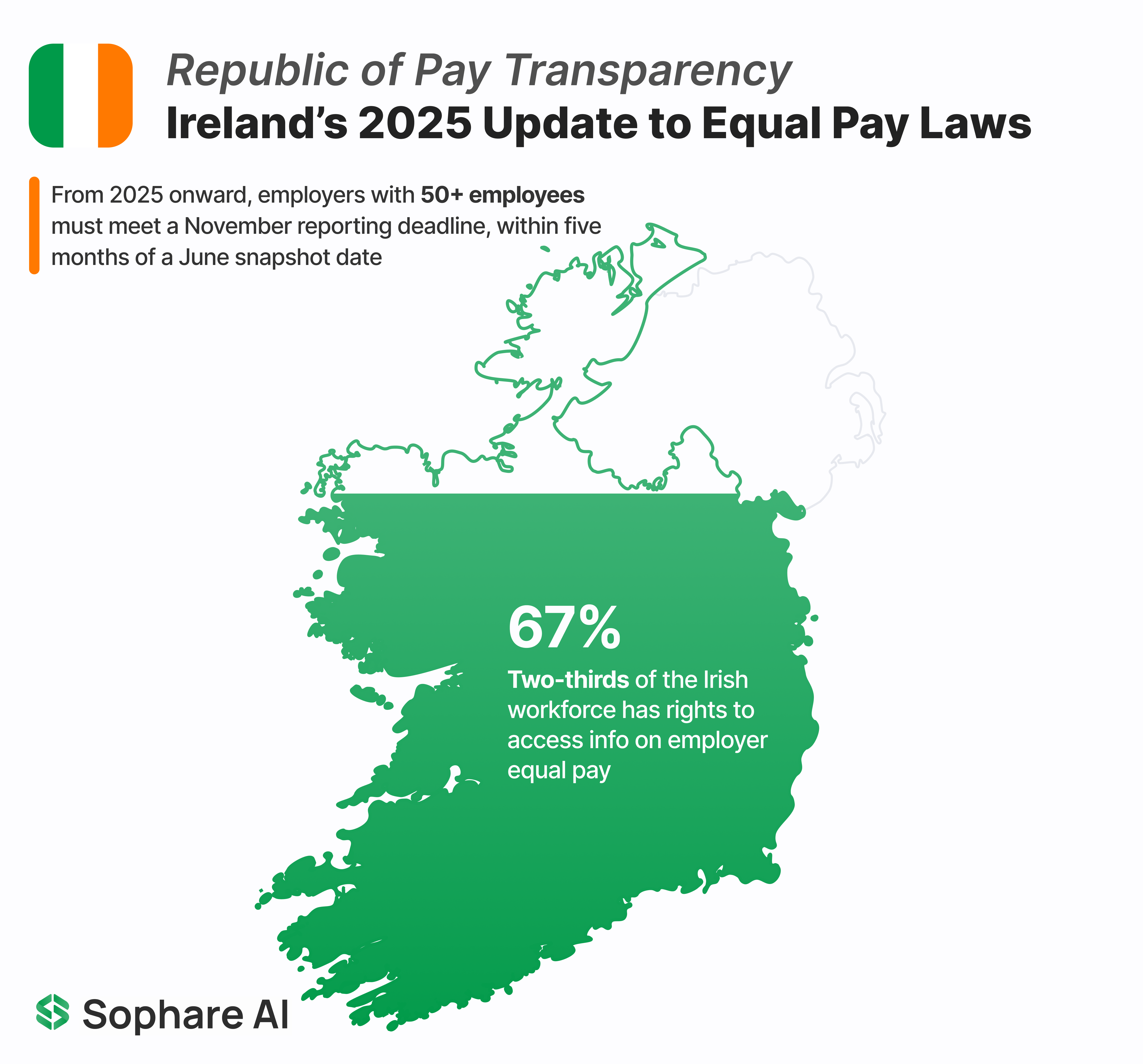
Ireland’s pay equity landscape is shifting quickly. The government’s campaign, “Highlight the difference to make a difference,” reflects a nationwide drive toward pay transparency. The Gender Pay Gap Information Act 2021 now extends to cover employers with 50 or more employees in 2025. HR leaders must understand new obligations and prepare teams ahead of the 2025 reporting cycle.
`
Effective date: October 29, 2025
Applies to: Employers with 25 or more employees in Massachusetts
Source: Massachusetts Attorney General’s Office: Pay Transparency Guidance (2025)
Having a clear job architecture is both mission-critical and high-return.
When a company begins to scale, structure becomes its quiet superpower. Think of job architecture as the blueprint of a building, or the trellis of a growing vine, or if you're musically inclined, the sheet music of a symphony. Human skills organized into neat families, levels, and titles all working together to shape, support, and harmonize growth. With the right design, every role finds its rhythm, every team climbs in sync, and the whole organization plays in tune. As AI reshapes how work is organized, this foundation helps companies adapt to new instruments, new tempos, and entirely new ways of working.

Equal pay is the legal principle that individuals doing the same, similar, or “equal value” work must be paid the same regardless of gender, race or other protected categories. What started because of labour activism in the 1960s and 70s became codified into law as equal pay acts emerged in various countries.
Today, pay equity is directly related to regulation, investor scrutiny, and workforce confidence. Companies with employees in multiple countries (or US states) need to adhere to multiple laws and reporting requirements when it comes to calculating equal pay for equal work and reporting on pay gaps. Failure to do so is an extremely expensive affair and most internal HR teams have neither the staff nor the bandwidth to do this work in-house.
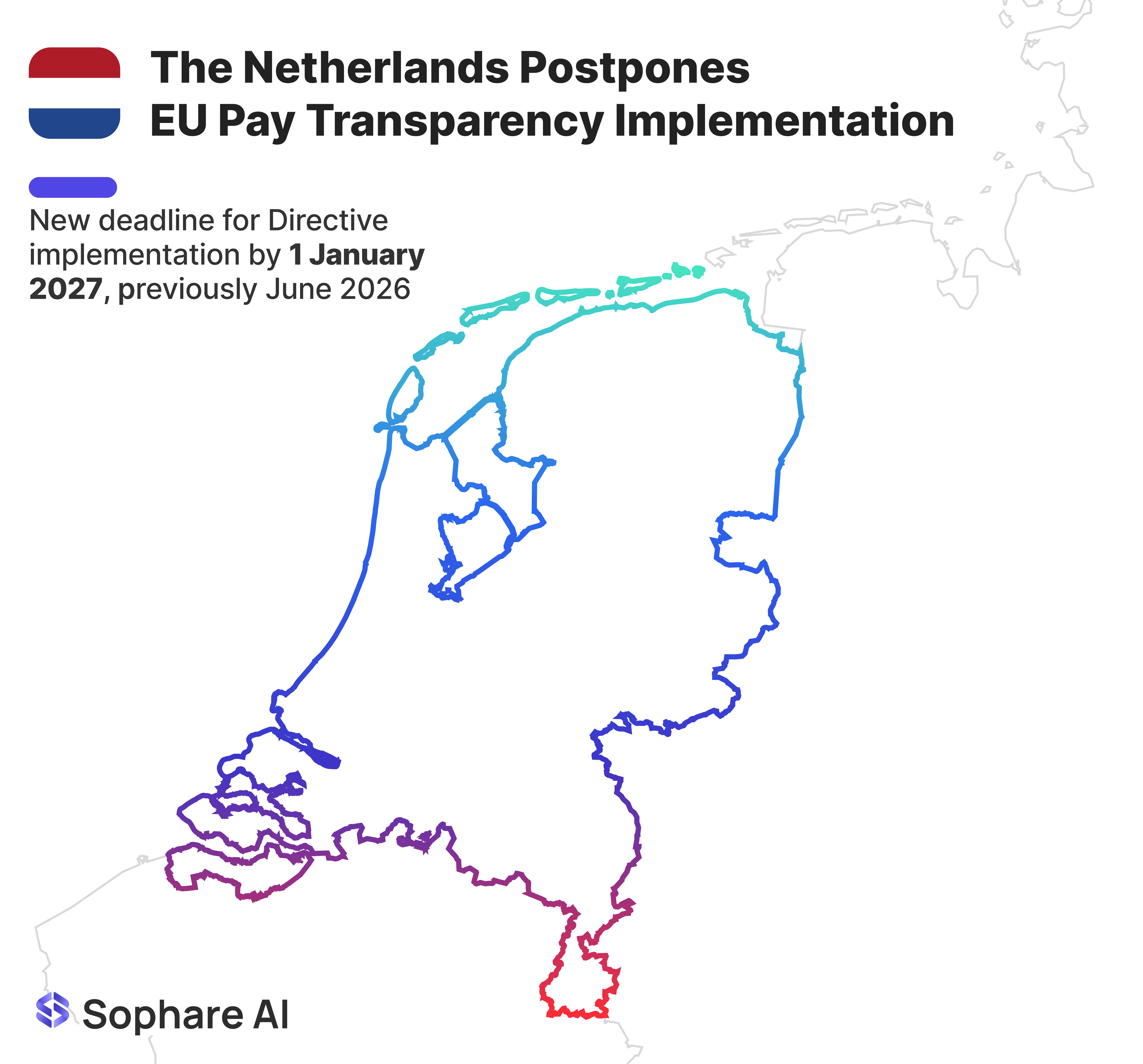
The Dutch government has officially postponed the implementation of the EU Pay Transparency Directive to 1 January 2027 (previously June 2026).
With the EU Pay Transparency Directive coming into force in June 2026, SMB companies across Europe are facing a fundamental shift in how they approach compensation. One of the most critical (and often overlooked) foundations for compliance and equal pay reporting is a clear, consistent job architecture.

The idea for this article was sparked during a conversation with Andrew Noto, author of People Matters.
🔗 Read the full article on People Matters here!
As a movement, pay transparency has grown from a fringe idea into a standard regimen for compensation teams globally.
If pay transparency were a stock you could have bought 20 years ago, it would look a lot like Apple (up 108,850%) or Nvidia (up 129,131%) today.
Back then, both companies were underrated and seen as niche and maybe even risky. But if you had invested early, you would have seen exponential power-law returns.
Pay transparency is on the same trajectory, both in terms of the amount of data that is being produced and the returns for employers who
proactively define their compensation strategies in the era of pay transparency.
Pay transparency is no longer theoretical. It is law in major U.S. states such as New York, California, Colorado, and Illinois, where employers are now required to publish salary ranges in job postings. For HR leaders in Europe and in U.S. states where disclosure is not yet mandatory, this trend is a glimpse of the near future. The data is clear: transparency reshapes recruitment outcomes, boosts employer credibility, and closes wage gaps. Companies that prepare now will find themselves not just compliant but ahead of competitors in attracting and retaining the best talent.
The EU Pay Transparency Directive (Directive (EU) 2023/970) introduces new rights for employees to obtain information about pay, and is aimed at enforcing equal pay for equal work between men and women. A key provision is that workers will have a “right to information” (Article 7) about their own pay and how it compares to the pay of peers in similar roles.